The Idea That Started the Book
I never expected that a few conversations about doing things alone would eventually become a children’s book.
In the past, I found myself talking with people about experiences they were hesitant to have by themselves. Some people did not feel comfortable eating at a restaurant alone, while others were afraid to go to the movies without someone else or travel on their own. Those conversations stayed with me because I started wondering why we sometimes view being alone as something negative.
There is certainly value in sharing experiences with family and friends, and I enjoy spending time with the people who are important to me. At the same time, I became interested in the idea that being comfortable on your own can create a different kind of freedom. You can move at your own pace, make your own decisions, and experience something without having to coordinate around someone else’s schedule or preferences.
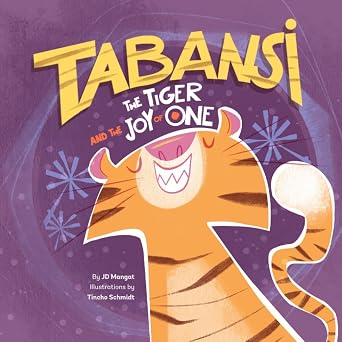
That idea became the inspiration for Tabansi The Tiger and the Joy of One, which I published in May 2026. I wanted to explore the concept in a way that would be approachable for young readers while still carrying an idea that adults could appreciate.
Why I Chose a Tiger
Once I decided I wanted to explore the idea through a children’s story, I needed a character who could make the concept engaging and memorable. That is where Tabansi came in.
Tabansi is a spirited tiger who faces the same kind of uncertainty that many people experience when they have to do something independently. The name Tabansi was also important to me. It means “one who endures,” which felt like a natural fit for a story about facing uncertainty and learning to move through it.
A tiger also gave me room to create a character who could be adventurous and fun while still experiencing a feeling that is familiar to many people.
I wanted the story to be enjoyable first. The message could exist underneath the story without making the book feel like a lesson or lecture. Rather than having Tabansi simply explain an idea to the reader, I wanted the reader to experience that idea alongside him.
The Idea Behind the Story
The central idea behind the book is that doing something alone does not automatically mean doing something lonely.
There is a difference between being isolated and being comfortable in your own company. Going somewhere alone can simply be another way of experiencing the world. It does not have to replace the experiences we share with family and friends.
That distinction was what made the subject interesting to me in the first place. I wasn’t trying to argue that doing things alone is always better. I was more interested in questioning the assumption that an experience is less enjoyable or meaningful simply because you are experiencing it by yourself.
That became the foundation for Tabansi’s story.
Learning to Become Comfortable With Uncertainty
It is easy to look at something unfamiliar and assume it will be difficult, uncomfortable, or intimidating. Sometimes our expectations about an experience are more intimidating than the experience itself.
In my own life, I’ve found that uncertainty becomes easier to manage once I have some experience with whatever I’m facing. That doesn’t mean every unfamiliar situation becomes easy, but taking a reasonable first step provides information you didn’t have before.
When I face a challenge, I tend to understand the problem before immediately looking for a solution. Once I have a better sense of what I’m dealing with, I can break it into smaller pieces and work through them one at a time.
I wanted Tabansi to experience a similar process. He doesn’t need to know everything immediately. Instead, the story gives him an opportunity to encounter something unfamiliar and discover what happens when he is willing to move through it.
Why I Wanted Young People to Be Part of the Conversation
Children encounter new experiences constantly. The first day of school, meeting new people, trying a new activity, speaking in front of a group, learning a new skill, or entering an unfamiliar environment can all feel intimidating.
Those experiences are part of growing up, but that doesn’t mean they are always easy.
Stories can give children a way to explore those feelings before they encounter similar situations themselves. A story gives readers someone to follow and allows them to see a character encounter uncertainty, respond to it, and discover something about themselves in the process.
That was one of the reasons I wanted to approach this subject through a children’s book rather than simply writing an essay about independence and confidence. I wanted the idea to feel like an experience rather than a lesson.
What Teaching Taught Me About Storytelling
My experience as a teacher influenced the way I approached writing the book. Teaching has given me a firsthand understanding of how differently people learn and respond to information.
Some students connect with explanations, while others understand an idea more easily when they can see an example or experience it through a story. That made storytelling feel like a natural way to explore the idea behind Tabansi.
Teaching also taught me that communicating an idea effectively isn’t always about explaining more. Sometimes the most effective approach is to take a familiar experience and present it from a slightly different perspective and medium.
That became particularly important when writing for children. I had an idea I wanted to explore, but I couldn’t simply explain the idea and expect the story to work. I had to think about how the character would experience it, what the reader would understand without being told directly, and what could be left for the reader to discover.
Creating the Story
Creating Tabansi The Tiger and the Joy of One was a completely new experience for me. I had written and communicated about ideas in other settings, but writing a children’s book required me to think about communication in a different way.
I had to consider the character, the story, the audience, and the message as separate but connected pieces. An idea that makes sense in an essay doesn’t necessarily make sense as a children’s story. I had to think about what would keep a young reader interested while still giving the story enough substance for the underlying idea to come through.
One of the more challenging parts was learning how much not to say.
When you have an idea you care about, there is a natural tendency to explain it. But a story works differently. The character has to experience something, and the reader needs enough room to interpret that experience for themselves. Instead of explaining exactly what Tabansi should learn, I had to think about how the story could allow that realization to develop naturally.
The process also involved learning parts of publishing that were unfamiliar to me. Turning the original idea into a finished book required making decisions, learning as I went, and figuring out what I didn’t yet know.
That experience reinforced something I’ve found in other parts of my life: you don’t necessarily need to know how to do everything before you begin. Sometimes the process of working on something is what teaches you how to finish it.
What Tabansi Represents
By the time I finished the book, Tabansi had come to represent something slightly broader than the original idea that inspired him.
For me, he represents the process of becoming more comfortable with uncertainty through experience. You don’t necessarily have to feel completely confident before trying something new. Sometimes the confidence comes afterward, once you’ve had the experience and learned that you were capable of handling it.
That idea can apply to many situations, whether someone is trying a new activity, entering an unfamiliar environment, traveling somewhere new, or simply doing something they have never done alone before.